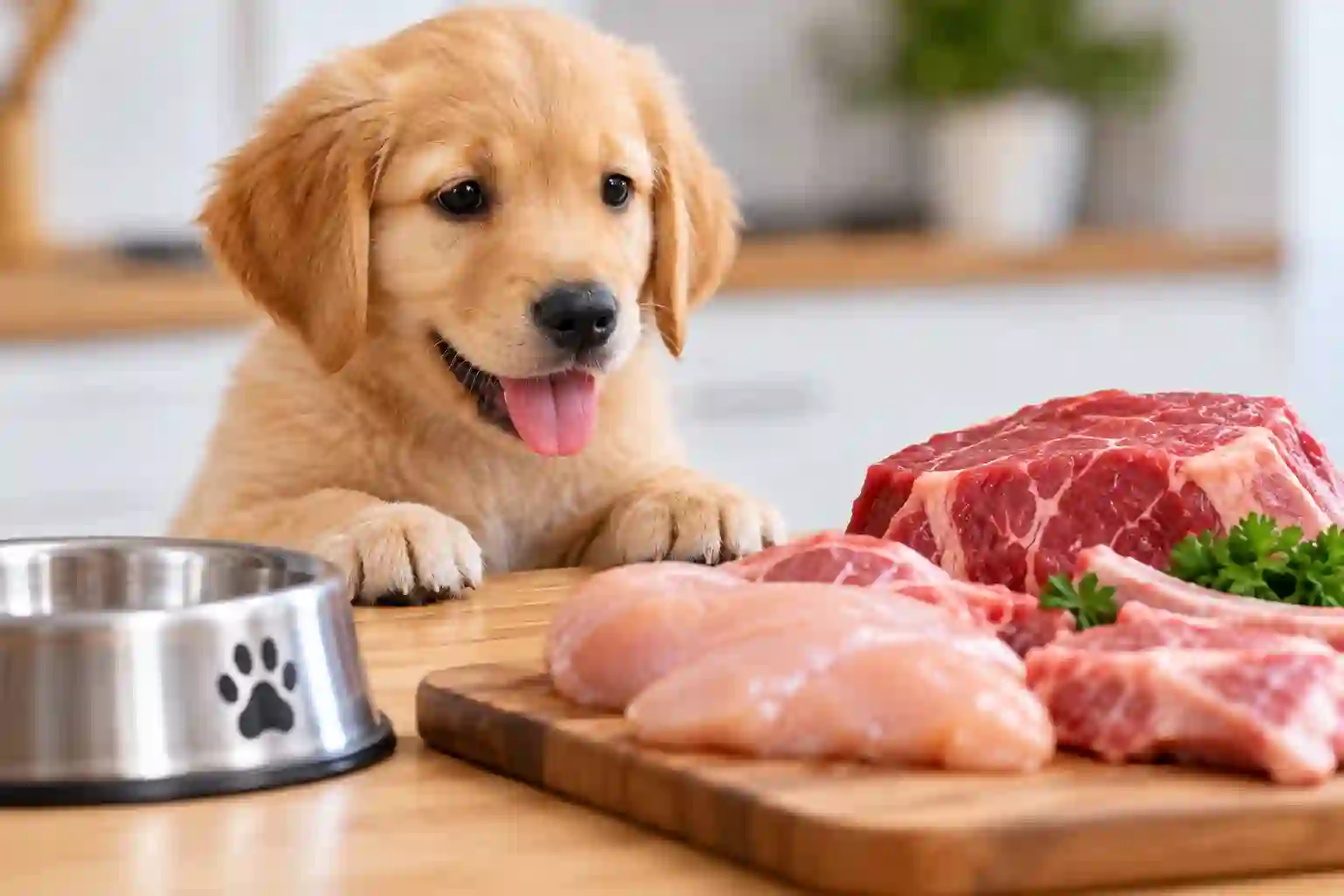
Yes, puppies can eat meat, provided it is fully cooked, unseasoned, and cut into small, manageable pieces. Animal-based protein is essential for a growing dog’s muscle development, making plain, lean meat an excellent addition to their diet or a high-value training treat.
However, a puppy’s digestive and immune systems are delicate and still developing. Feeding raw meat, heavily processed deli cuts, or meats cooked with toxic ingredients like onions and garlic can lead to severe gastrointestinal distress or dangerous bacterial infections.

Is Meat Safe for Puppies?
Meat is generally safe and highly nutritious for puppies when prepared specifically for canine consumption. Understanding which forms of meat are safe is the first step in preventing accidental foodborne illness.
Here is a quick breakdown of how different forms of meat rank in terms of safety for young dogs.
| Meat Form | Safety Verdict | Primary Concern |
| Boiled/Baked Plain | Safe | None, ideal for sensitive stomachs. |
| Raw Meat | Avoid | High risk of bacterial contamination. |
| Deli Meats/Cold Cuts | Avoid | High sodium and harmful preservatives. |
| Cooked Bones | Dangerous | Splintering, choking, and intestinal blockage. |
Best Types of Meat for Puppies
Lean, unseasoned meats are the safest choices for a puppy’s sensitive digestive tract. Selecting a highly digestible protein helps prevent unnecessary upset stomach or diarrhea.
The following table outlines the most common and appropriate meat choices for young dogs.
| Meat Type | Fat Content | Best Use |
| Chicken Breast | Very Low | Everyday treats, bland diets for upset stomachs. |
| Turkey Breast | Very Low | Lean protein alternative to chicken. |
| Lean Beef | Moderate | High-value training treats, iron source. |
| Salmon (Cooked) | High (Healthy Fats) | Omega-3 support for brain and coat health. |
The Risks of Raw Meat and Bones
While raw diets are heavily debated in the pet community, they present significant and documented hazards to young dogs. Cooking meat thoroughly is the only reliable way to protect an immature immune system from pathogens.
Review the specific hazards associated with feeding uncooked meat and animal parts.
| Hazard | Source | Potential Impact on Puppy |
| Bacterial Infection | Salmonella, E. coli, Listeria | Severe diarrhea, vomiting, lethargy, dehydration. |
| Parasites | Raw pork, wild game | Intestinal worms, severe gastrointestinal illness. |
| Dental Fractures | Hard raw bones | Broken teeth requiring veterinary extraction. |
| Obstructions | Swallowed bone fragments | Life-threatening intestinal blockage requiring surgery. |
“Puppies have immature immune systems, making them highly susceptible to foodborne pathogens like Salmonella and E. coli commonly found in raw meat.”
When handling raw meat in your home, always wash your hands and sanitize surfaces to prevent cross-contamination to your puppy’s bowls or toys.
How to Safely Prepare Meat for Puppies
Preparation is just as important as the type of protein you choose. Human meals are often cooked with ingredients that are toxic or irritating to dogs.
Follow these strict guidelines to ensure the food is safe for your puppy to consume.
| Preparation Step | Action | Reason |
| Trim the Fat | Remove visible fat and skin. | Prevents pancreatitis and digestive upset. |
| Cook Thoroughly | Bake, boil, or steam until done. | Eliminates harmful bacteria and parasites. |
| Skip Seasoning | Do not add salt, oil, garlic, or onions. | Garlic and onions are highly toxic to dogs. |
| Remove Bones | Debone completely before serving. | Prevents choking and intestinal punctures. |
| Chop Finely | Cut into pea-sized bites. | Reduces choking risks for fast eaters. |
When Can Puppies Start Eating Meat?
Puppies typically begin transitioning to solid foods around three to four weeks of age. Introducing plain, cooked meat should happen gradually alongside their nutritionally complete puppy kibble or wet food.
This timeline explains how a puppy’s ability to process meat changes as they grow.
| Puppy Age | Meat Introduction | Serving Texture |
| Under 4 Weeks | None (Milk only) | N/A |
| 4 to 8 Weeks | Introduction phase | Mashed or blended into a soft gruel. |
| 8 to 12 Weeks | Training treats | Very small, soft, pea-sized pieces. |
| 3 Months & Older | Occasional dietary topper | Bite-sized chunks proportional to breed size. |
Signs of Meat Intolerance or Allergies
Beef and chicken are among the most common food allergens in dogs. You should monitor your puppy closely for several days when introducing a new protein source for the first time.
Watch for these clinical signs that indicate your puppy may not tolerate a specific meat.
| Symptom Category | Specific Signs | Recommended Action |
| Gastrointestinal | Vomiting, loose stools, gas. | Stop feeding the meat; offer a bland diet. |
| Dermatological | Itchy skin, red paws, ear infections. | Consult a vet; consider a novel protein diet. |
| Allergic Reaction | Facial swelling, hives, difficulty breathing. | Seek emergency veterinary care immediately. |
- Introduce only one new type of meat at a time.
- Wait 48 hours before introducing another new food.
- If your puppy shows signs of an allergy, your veterinarian may recommend novel proteins like lamb, venison, or duck.
Frequently Asked Questions
Review these common questions to help you safely incorporate meat into your puppy’s daily routine.
Can puppies eat deli meat or cold cuts?
No. Deli meats contain excessive sodium, nitrates, and artificial preservatives that can cause dehydration and stomach upset in puppies. Many cold cuts are also seasoned with toxic ingredients like onion or garlic powder.
How much meat can I give my puppy?
Meat and other treats should never make up more than 10% of your puppy’s daily caloric intake. The remaining 90% must come from a nutritionally complete and balanced puppy food formulated for their specific life stage.
Can puppies eat meat cooked with salt and pepper?
Puppies should only eat unseasoned meat. While a tiny amount of black pepper is not toxic, it can irritate their nasal passages and stomach, while excess salt can lead to sodium-ion poisoning or severe dehydration.
What to Remember About Feeding Puppies Meat
Plain, properly cooked meat is a safe and highly motivating treat for growing puppies. When boiled or baked without harmful seasonings, lean proteins like chicken, turkey, and beef provide excellent nutritional support and aid in behavioral training.
Always prioritize a balanced, life-stage-appropriate puppy kibble as the foundation of your dog’s diet. If you suspect your puppy has ingested toxic seasonings, raw bones, or contaminated meat, contact your veterinarian promptly for professional guidance.