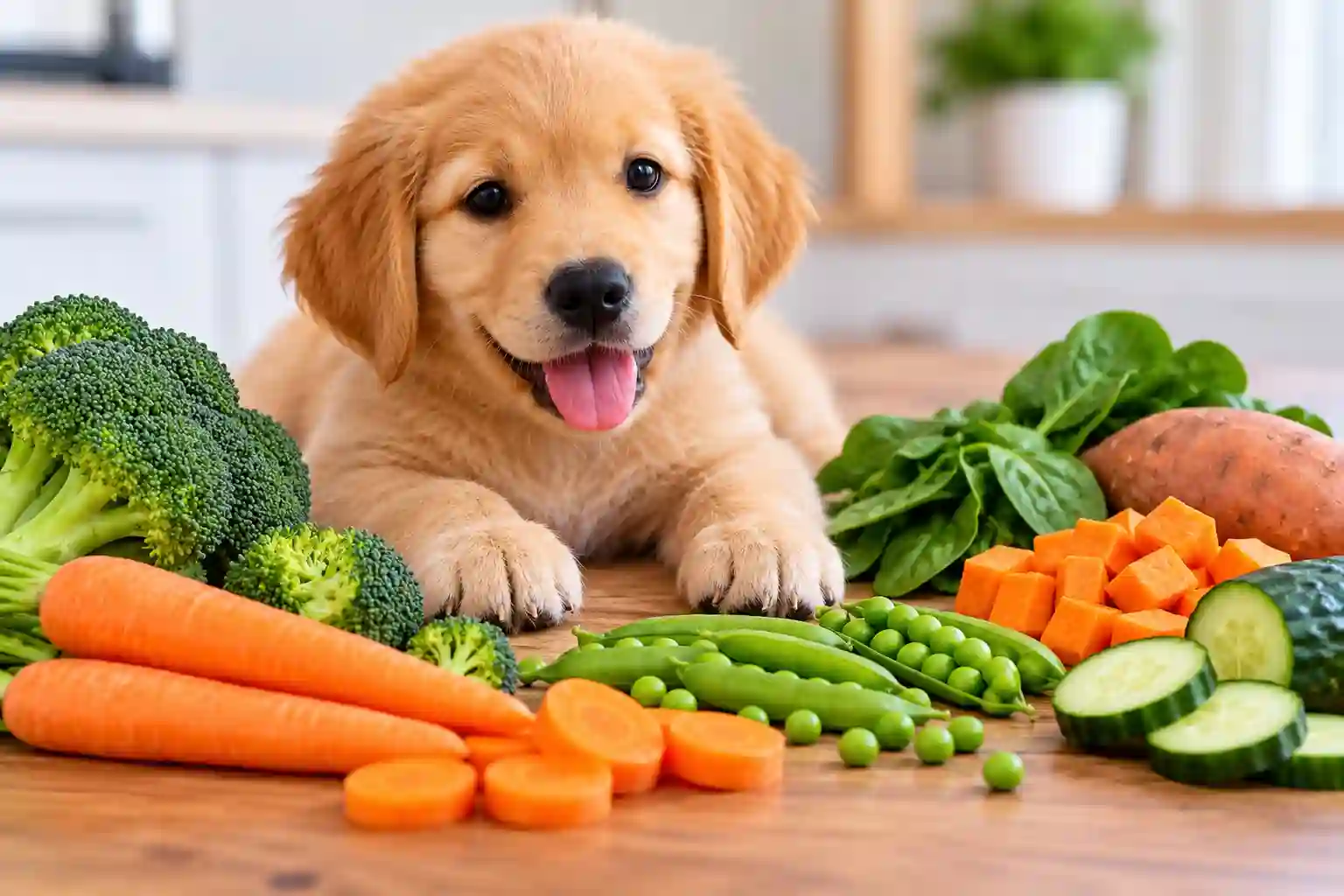
While puppies get their complete and balanced nutrition from high-quality commercial puppy food, certain vegetables make excellent, low-calorie treats. Safe options like carrots, green beans, and sweet potatoes can provide a satisfying crunch and beneficial fiber for growing dogs.
However, not all vegetables are safe for your new companion. Onions, garlic, and certain other plants are highly toxic, and even safe vegetables must be prepared correctly and fed in strict moderation. Knowing exactly what vegetables puppies can eat is essential to avoiding sudden stomach upset or dangerous emergencies.

Safe Vegetables for Puppies
Many common household vegetables are perfectly safe and healthy for your puppy to snack on. Here is a quick look at the best options and their primary benefits.
| Vegetable | Primary Benefit | Best Serving Method |
| Carrots | Dental health, Vitamin A | Raw chunks or steamed |
| Green Beans | Low calorie, high fiber | Steamed or raw, plain |
| Sweet Potato | Digestion support | Cooked and mashed |
| Cucumber | Hydration | Raw, peeled, seedless |
Carrots
Carrots are a classic, crunchy treat that most puppies naturally enjoy. They are rich in beta-carotene and can help soothe teething discomfort when offered cold. Always cut them into appropriate bite-sized pieces to prevent a choking hazard.
Green Beans
Plain green beans are packed with beneficial vitamins and make an excellent, low-calorie training reward. Ensure you use fresh or frozen beans, avoiding canned varieties that contain high amounts of added sodium.
Sweet Potatoes
Cooked sweet potatoes provide excellent dietary fiber that supports healthy, regular digestion. Never feed sweet potatoes raw, as the tough fibers are far too difficult for a puppy’s sensitive stomach to break down safely.
Vegetables to Feed with Caution
Some vegetables offer nutritional benefits but require strict portion control or specific preparation to be safe. Use these options sparingly to prevent gastrointestinal distress.
| Vegetable | Potential Issue | Safe Serving Rule |
| Broccoli | Gastric irritation | Very small, cooked amounts |
| Spinach | Oxalates (kidney strain) | Rare, tiny portions |
| Cabbage | Gas and bloating | Lightly steamed, small amounts |
Broccoli
Broccoli contains isothiocyanates, compounds that can cause severe gastric irritation in dogs if overfed. The florets are generally safe in very small quantities, but the tough stalks pose a significant choking risk.
Spinach
While spinach is highly nutrient-dense, it contains high levels of oxalic acid. Over time, frequent consumption can interfere with calcium absorption and strain a puppy’s developing kidneys, meaning it should only be a rare treat.
Toxic Vegetables to Strictly Avoid
Certain vegetables are highly toxic to dogs and must be kept completely out of your puppy’s reach. Accidental ingestion of these items requires immediate veterinary attention.
| Vegetable | Primary Hazard | Urgency Level |
| Onions | Destroys red blood cells | Emergency |
| Garlic | Destroys red blood cells | Emergency |
| Rhubarb | Tremors, kidney failure | Emergency |
| Wild Mushrooms | Liver or kidney damage | Emergency |
Onions, Garlic, and Leeks
All members of the allium family, including onions, garlic, chives, and leeks, are highly toxic to dogs. They contain compounds that damage red blood cells, leading to severe and potentially fatal anemia. Powders and cooked forms are just as dangerous as raw vegetables.
Wild Mushrooms
While plain, store-bought white button mushrooms are generally safe, wild mushrooms can be deadly. It is safest to keep all mushrooms away from your puppy to prevent them from foraging dangerous varieties outdoors.
How to Safely Prepare Vegetables
Even safe vegetables can become dangerous if they are prepared incorrectly or mixed with harmful human ingredients. Always follow basic food safety guidelines when sharing kitchen snacks with your dog.
| Method | Safe for Puppies? | Why |
| Plain steaming | Yes | Softens texture, retains nutrients |
| Boiling | Yes | Makes tough vegetables digestible |
| Frying in oil | No | High fat causes severe digestive upset |
| Adding salt or butter | No | Unnecessary sodium and fat |
Follow these practical preparation rules for any vegetable:
- Wash all produce thoroughly to remove harmful pesticides and dirt.
- Remove all stems, leaves, seeds, and tough outer skins.
- Cut vegetables into small, bite-sized pieces to prevent choking.
- Serve the food completely plain without salt, butter, garlic, or spices.
Portion Sizes and The 10 Percent Rule
Treats, including healthy vegetables, should never disrupt a puppy’s carefully balanced diet. Overfeeding fiber can quickly cause diarrhea and nutrient imbalances.
| Puppy Size | Daily Treat Allowance (All Treats) | Example Veggie Portion |
| Toy (under 10 lbs) | Under 20 calories | 1-2 thin carrot slices |
| Small (10-20 lbs) | Under 40 calories | 1 baby carrot |
| Medium (20-50 lbs) | Under 80 calories | 2-3 plain green beans |
| Large (50+ lbs) | Under 120 calories | 1-2 tablespoons sweet potato |
Veterinary nutritionists consistently recommend that all treats combined make up no more than 10% of your puppy’s daily caloric intake. The remaining 90% must come from a complete, life-stage-appropriate puppy food formulated for growth.
“Vegetables should be viewed as an occasional low-calorie reward, not a replacement for the essential proteins, fats, and calcium found in formulated puppy diets.”
Frequently Asked Questions
Can puppies eat raw vegetables?
Some vegetables, like carrots and cucumbers, are safe to eat raw if they are cut into very small pieces. However, tough vegetables like sweet potatoes and broccoli should always be cooked to aid digestion and prevent intestinal blockages.
What should I do if my puppy eats an onion?
Onion ingestion is a medical emergency for dogs of all ages. Do not wait for symptoms like lethargy or pale gums to appear; contact your veterinarian or a pet poison helpline immediately for safe decontamination guidance.
Can I mix vegetables into my puppy’s daily food?
Yes, you can occasionally mix a small amount of plain, cooked vegetables into their kibble to encourage eating. Do this sparingly so your puppy does not learn to pick out the treats and refuse their regular balanced food.
What to Remember About Feeding Puppies Vegetables
When deciding what vegetables puppies can eat, always prioritize safety, portion control, and proper preparation. Safe options like green beans, carrots, and sweet potatoes make excellent, healthy training rewards when served plain and in small, bite-sized pieces.
Always introduce new foods one at a time to easily monitor for any digestive upset or allergic reactions. If your puppy accidentally consumes a known toxic vegetable like onions or garlic, seek professional veterinary care immediately rather than waiting for symptoms to develop.