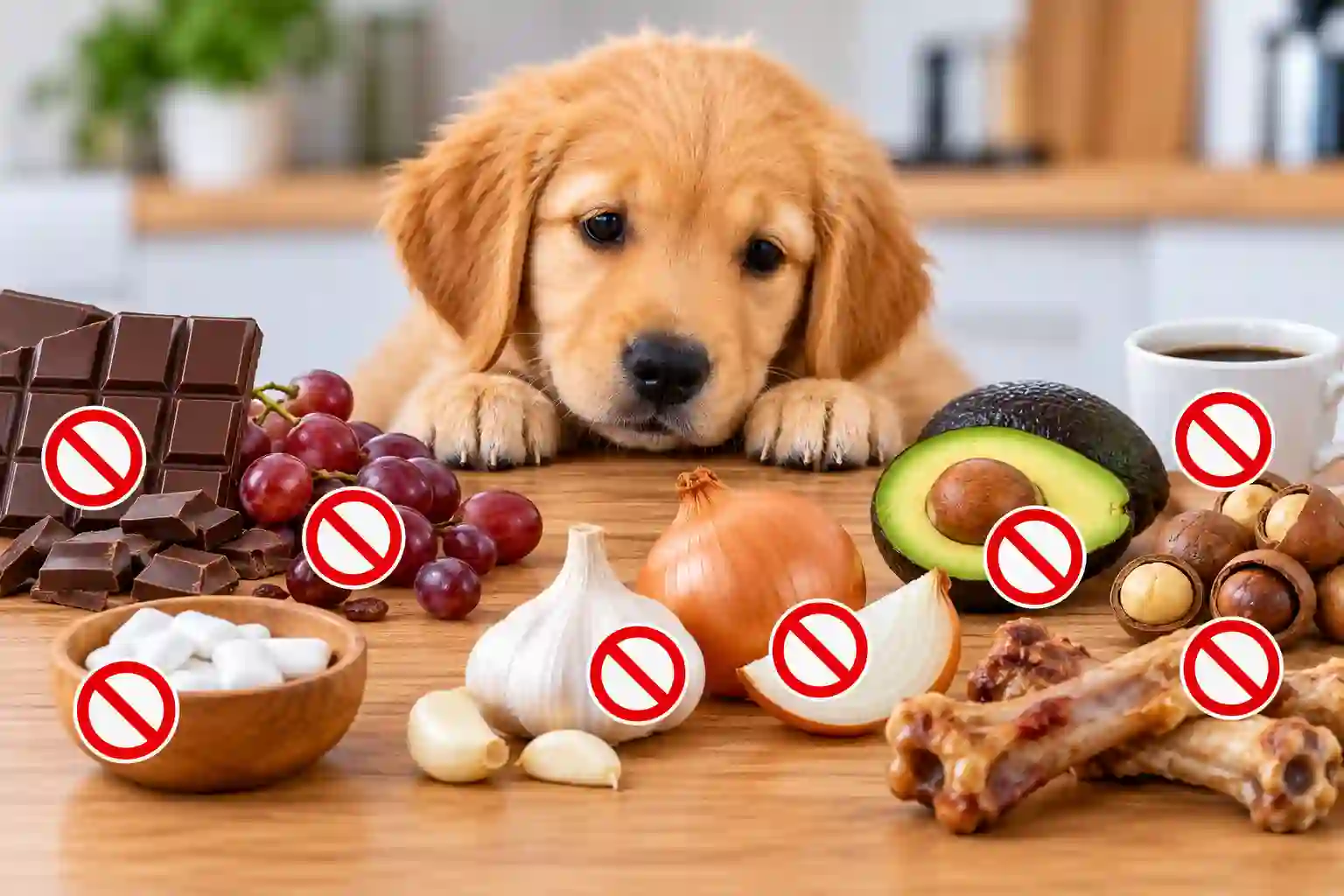
Bringing a new dog home means learning exactly which foods puppies can’t eat to keep them safe. A puppy’s digestive system is delicate, and many common human foods contain compounds that are highly toxic to dogs.
Understanding these dietary dangers helps prevent late-night veterinary emergencies and long-term health issues. Always keep hazardous ingredients out of reach and stick to a balanced, life-stage-appropriate diet.

Highly Toxic Foods That Require Immediate Action
Certain ingredients act as fast-acting poisons in a dog’s body. Accidental ingestion of these items requires immediate veterinary intervention rather than waiting for symptoms.
Table 1: The most critical food hazards for puppies.
| Toxic Food | Primary Hazard | Emergency Level |
| Xylitol | Severe blood sugar drop, liver failure | Critical (Immediate Vet) |
| Grapes/Raisins | Acute kidney failure | Critical (Immediate Vet) |
| Chocolate | Heart arrhythmias, neurological issues | High (Call Vet/Poison Control) |
| Macadamia Nuts | Nervous system depression | High (Call Vet) |
Xylitol (Birch Sugar)
Xylitol is an artificial sweetener found in sugar-free gum, peanut butter, and baked goods. Even a tiny amount can cause a life-threatening drop in a puppy’s blood sugar.
Always check ingredient labels on pantry items before sharing anything with your dog. If your puppy ingests xylitol, seek emergency veterinary care immediately.
Grapes and Raisins
Grapes, raisins, and currants carry an unknown toxin that can cause rapid, irreversible kidney failure in dogs. The toxicity does not depend on the puppy’s size or the breed.
Never offer trail mix, baked goods, or fruit salads containing these items. Even a single grape warrants an immediate call to your veterinarian.
Chocolate and Caffeine
Both chocolate and caffeine contain methylxanthines, which dogs cannot metabolize effectively. Dark chocolate and baking cocoa are the most concentrated and dangerous forms.
Symptoms include vomiting, rapid heart rate, tremors, and potential seizures. Keep all coffee grounds, tea bags, and chocolate treats securely locked away.
Dangerous Vegetables and Alliums
While some vegetables make healthy snacks, the allium family severely damages a puppy’s red blood cells. These ingredients are common in everyday cooking and human leftovers.
Table 2: Vegetables that pose a significant threat to puppies.
| Vegetable | Risk Factor | Common Symptoms |
| Garlic | Destroys red blood cells | Lethargy, pale gums, collapse |
| Onions | Anemia and organ damage | Weakness, elevated heart rate |
| Chives | Cumulative red blood cell damage | Vomiting, breathing issues |
| Leeks | Oxidative damage to blood | Dark urine, weakness |
Onions, Garlic, and Chives
All forms of onions and garlic—including powdered, raw, cooked, or dehydrated—are toxic to puppies. They cause oxidative damage to red blood cells, leading to severe anemia.
The damage is often cumulative, meaning small, repeated doses can be just as deadly as a large portion. Never feed your puppy table scraps cooked in these common aromatics.
Harmful Nuts and Seeds
Most nuts are too high in fat for a puppy’s sensitive digestive system, and some are directly toxic. Small seeds and fruit pits also present serious choking hazards.
Table 3: Assessing the safety of common nuts and pits.
| Item | Danger Level | Primary Issue |
| Macadamia Nuts | Highly Toxic | Paralysis, hyperthermia, tremors |
| Walnuts | Unsafe | Mold toxicity, intestinal blockage |
| Cherry Pits | Toxic | Cyanide poisoning, choking |
| Apple Seeds | Toxic (in volume) | Contains trace amounts of cyanide |
Macadamia Nuts
Macadamia nuts are highly poisonous to dogs, though the exact mechanism remains unknown. Ingestion leads to weakness, elevated body temperature, vomiting, and tremors.
These symptoms can last up to 48 hours and require professional monitoring. Ensure baked goods containing these nuts are never left unattended on kitchen counters.
Fruit Pits and Seeds
Pits from cherries, peaches, and plums contain cyanide, which is toxic when chewed and digested. Additionally, large pits can easily cause an intestinal blockage in a small puppy.
Always core and seed safe fruits like apples before offering a slice. If your puppy swallows a whole pit, contact your vet immediately to monitor for obstruction.
Kitchen Hazards and Unsafe Meats
Raw ingredients and heavily processed meats carry bacterial risks and dangerously high sodium levels. Puppies have developing immune systems that cannot easily fight off foodborne pathogens.
Table 4: Common meat and pantry hazards to avoid.
| Item | Why It’s Dangerous | Safer Alternative |
| Raw Pork/Chicken | Salmonella and E. coli risk | Plain, fully boiled chicken |
| Bacon | Extreme fat and sodium content | Lean, unseasoned turkey |
| Cooked Bones | Splintering and internal puncture | Safe rubber chew toys |
| Salty Snacks | Sodium ion poisoning | Plain, dog-safe vegetables |
Raw Meat and Cooked Bones
Raw meat can harbor dangerous bacteria like Salmonella, posing risks to both the puppy and your family. Cooked bones become brittle, easily splintering and puncturing the digestive tract.
Stick to commercially prepared diets or thoroughly cooked, unseasoned lean meats. Provide appropriate dental chews instead of animal bones to satisfy their urge to chew.
Fatty Scraps and Salty Foods
High-fat foods like bacon and sausage can trigger pancreatitis, a painful and potentially fatal inflammation of the pancreas. Too much salt leads to excessive thirst and sodium ion poisoning.
Symptoms of sodium poisoning include vomiting, diarrhea, tremors, and seizures. Keep your puppy away from potato chips, pretzels, and fatty holiday trimmings.
Beverages and Dairy Restrictions
Puppies lack the enzymes needed to digest many human beverages and rich dairy products. Exposure to alcohol or large amounts of lactose causes severe digestive and systemic distress.
Table 5: Assessing the risks of liquids and dairy.
| Liquid/Food | Primary Issue | Risk Level |
| Alcohol | Central nervous system depression | Critical |
| Raw Yeast Dough | Expands in stomach, produces alcohol | Critical |
| Milk | Lactose intolerance, diarrhea | Moderate |
| Ice Cream | High sugar, fat, and lactose | Moderate |
Alcohol and Yeast Dough
Dogs are highly sensitive to alcohol, and even minor ingestion can cause dangerous drops in blood sugar, blood pressure, and body temperature. Unbaked yeast dough is exceptionally hazardous.
Dough expands in the warm environment of the stomach, risking tissue rupture. Furthermore, the fermenting yeast produces alcohol, leading to dual toxicity.
Milk and Heavy Dairy
After weaning, most puppies lose the lactase enzyme necessary to properly break down milk. Feeding them cheese, ice cream, or milk often results in severe diarrhea and stomach pain.
Occasional licks of plain yogurt might be tolerated, but heavy dairy should be avoided. Chronic digestive upset can quickly lead to dangerous dehydration in young dogs.
What to Do If Your Puppy Eats Something Dangerous
Accidents happen even in well-managed homes, making quick and calm action essential. Knowing exactly how to respond can save your puppy’s life.
Table 6: Clear steps to follow during a pet poisoning emergency.
| Step | Action | Why It Matters |
| 1. Assess | Identify what was eaten and how much. | Helps vets determine toxicity levels. |
| 2. Remove | Clear the remaining food away safely. | Prevents the puppy from eating more. |
| 3. Call | Contact your vet or Pet Poison Helpline. | Provides immediate professional guidance. |
| 4. Monitor | Watch for vomiting, lethargy, or distress. | Informs the vet of current symptoms. |
| 5. Do Not Induce | Never force vomiting without vet approval. | Some toxins cause worse damage coming back up. |
Immediate Veterinary Contact
If you suspect your puppy has ingested a toxic food, do not wait for symptoms to appear. Many toxins cause irreversible internal damage before physical signs become obvious.
Before calling the clinic, quickly gather the following information to help the veterinary team:
- The exact food and brand ingested.
- The estimated quantity consumed.
- The approximate time of ingestion.
- Your puppy’s current weight and symptoms.
“Time is the most critical factor in treating food toxicity. Immediate veterinary consultation is always safer than hoping the puppy will pass the food harmlessly.”
Keep the packaging or a sample of the ingested item to show the veterinary team. Never attempt to use hydrogen peroxide to induce vomiting unless explicitly instructed by a professional.
Frequently Asked Questions
Can one grape hurt a puppy?
Yes, even a single grape or raisin can trigger acute kidney failure in a puppy. The toxic compound is highly potent, and immediate veterinary assessment is necessary.
How long does food poisoning take to show in puppies?
Symptoms can appear anywhere from 30 minutes to 48 hours, depending on the toxin and the puppy’s size. This delayed reaction is why you should never wait for symptoms before calling a vet.
Is it safe for puppies to eat cheese?
While not entirely toxic, cheese is high in fat and lactose, which causes diarrhea in many puppies. It should generally be avoided or used only in microscopic amounts for high-value training.
What should I do if my puppy eats chocolate?
Immediately determine the type of chocolate and the estimated amount ingested. Call your veterinarian or an animal poison control center right away for specific instructions based on your puppy’s weight.
What to Remember About Dietary Dangers
Protecting your dog starts with understanding exactly which foods puppies can’t eat and securing your kitchen. Always verify a food’s safety before sharing, and train family members to follow strict feeding rules.
Stick to a high-quality, balanced puppy diet for optimal growth and development. When in doubt about a dropped scrap or stolen snack, contact your veterinarian immediately to ensure your puppy’s ongoing safety.