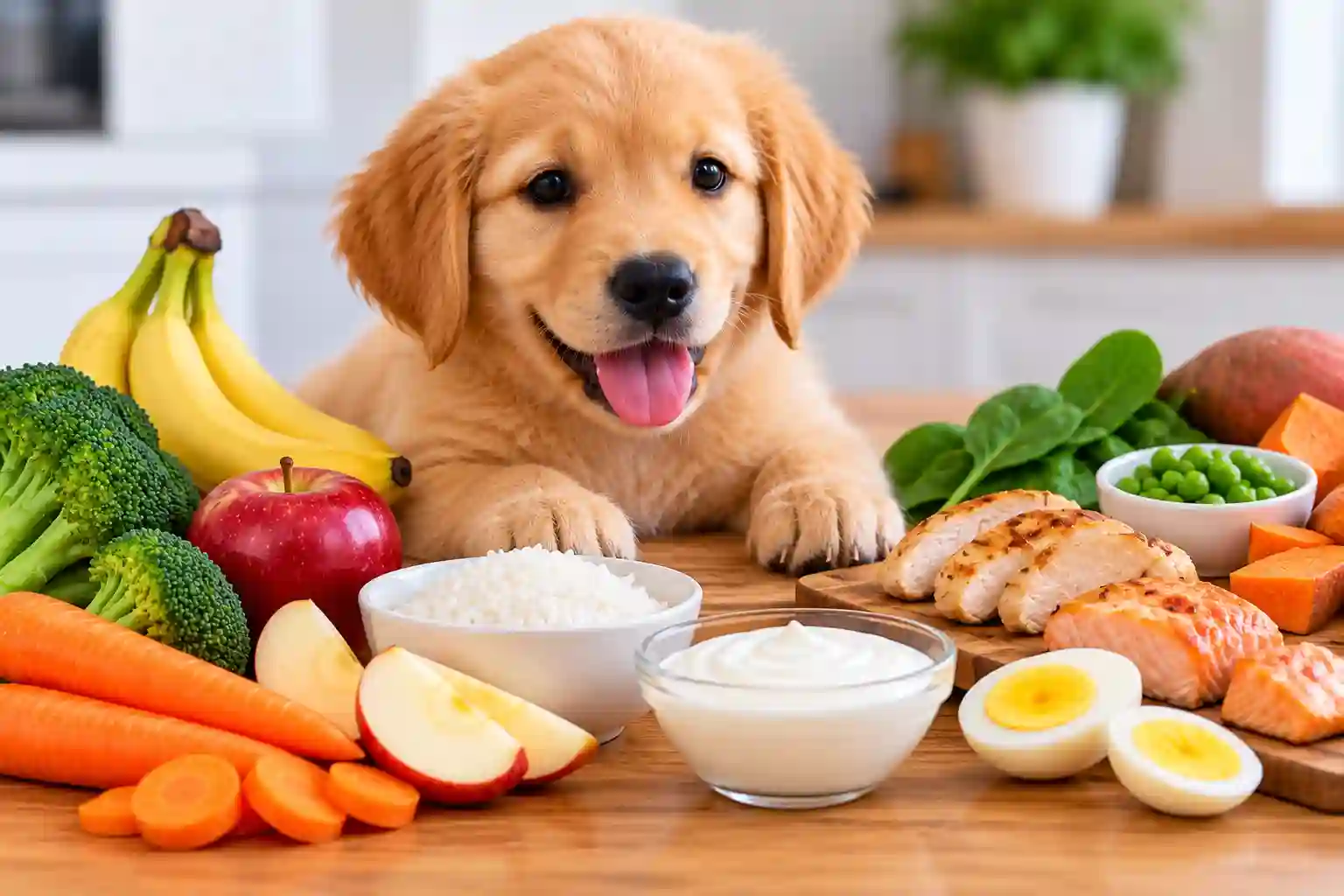
Puppies can safely eat many single-ingredient human foods, including lean meats like boiled chicken, and crunchy produce like carrots and apples. However, a puppy’s digestive system is highly sensitive, and their rapidly growing bodies require a strictly balanced diet to develop properly.
Before raiding your fridge, it is crucial to know which foods are safe for training and which are dangerously toxic. You must also limit any extra snacks to a very small fraction of their daily caloric intake to prevent nutritional imbalances or an upset stomach.

The 10% Rule for Puppy Nutrition
Before offering a taste of what human food can puppies eat, you must understand their unique nutritional requirements. Extra snacks should never displace a balanced puppy kibble or properly formulated wet food.
Use this general dietary breakdown to understand how human food fits into your puppy’s daily meals.
| Diet Component | Percentage Limit | Purpose |
| Balanced Puppy Food | Minimum 90% | Provides essential calcium, phosphorus, and vitamins for bone growth. |
| Human Food & Treats | Maximum 10% | Used strictly for training rewards and occasional enrichment. |
Safe Fruits for Puppies
Fresh fruits can be excellent, low-calorie training rewards for highly motivated pups. Always remove seeds, pits, and tough cores, which can pose choking hazards or contain dangerous cyanide.
Here are some of the safest fruits for puppies and how to prepare them correctly.
| Fruit | Preparation | Benefits |
| Apples | Core and seeds removed, cut into tiny cubes | High in fiber and vitamins A and C. |
| Blueberries | Washed and served whole (or mashed for tiny pups) | Rich in antioxidants; perfect natural size for training. |
| Bananas | Peeled and sliced thinly | Good source of potassium, but high in natural sugar. |
| Watermelon | Rind and seeds completely removed | Excellent for hydration on hot summer days. |
Safe Vegetables for Puppies
Vegetables provide a satisfying crunch that teething puppies often naturally gravitate toward. They are generally lower in sugar than fruits, making them ideal for everyday snacking.
Review these safe vegetable options before offering them to your dog.
| Vegetable | Preparation | Benefits |
| Carrots | Cut into bite-sized pieces or boiled until soft | Great for teething relief and dental health. |
| Green Beans | Plain, unseasoned, chopped (raw or steamed) | Low calorie, filling, and packed with iron. |
| Cucumbers | Sliced into thin, manageable rounds | Low carbohydrate profile with high water content. |
| Sweet Potato | Baked or boiled plain, skins removed | Gentle on the stomach; excellent for healthy digestion. |
Safe Lean Meats and Proteins
Plain, cooked meats are highly valuable tools for teaching young puppies basic obedience. However, any meat you share must be entirely free of oils, butter, and heavy seasonings.
Stick to these lean proteins and always ensure they are fully cooked to prevent bacterial infections.
| Protein Type | Preparation Rules | Notes |
| Chicken Breast | Boiled or baked plain, no skin, no bones | A highly digestible, gentle protein source. |
| Turkey | Plain white meat, no fat or skin | Avoid processed deli meats due to high sodium. |
| Plain Eggs | Scrambled or hard-boiled, no butter or salt | Excellent source of protein and essential fatty acids. |
| Salmon | Fully cooked, de-boned, unseasoned | High in Omega-3s for brain and coat development. |
Dairy and Grains: Proceed with Caution
Many puppies enjoy the taste of dairy and grains, but these foods can easily trigger food sensitivities. Always test a tiny, pea-sized amount first to see how your puppy’s stomach reacts over the next 24 hours.
Offer these items only in very small amounts to test your puppy’s digestive tolerance.
| Food Item | Hazard or Concern | Safe Serving Method |
| Cheese | High fat content; many dogs develop lactose intolerance. | Tiny cubes of low-fat cheese, such as mozzarella. |
| Plain Yogurt | Lactose can cause gas and loose stools. | A small spoonful of plain Greek yogurt with zero artificial sweeteners. |
| White Rice | Can cause a rapid spike in blood sugar if overfed. | Serve plain and boiled; highly useful for soothing an upset stomach. |
| Peanut Butter | High calorie; high risk of containing toxic xylitol. | Check the label carefully; use strictly plain, unsalted varieties. |
Highly Toxic Human Foods to Avoid Completely
Certain common pantry staples and household foods are extremely dangerous to dogs. Even microscopic amounts can cause organ failure or severe illness in a small, developing puppy.
Keep these common kitchen items completely out of reach of your puppy at all times.
| Toxic Food | Primary Hazard | Potential Symptoms |
| Grapes and Raisins | Can cause acute and sudden kidney failure. | Vomiting, lethargy, severe loss of appetite. |
| Onions and Garlic | Destroys red blood cells, leading to severe anemia. | Weakness, pale gums, elevated heart rate, collapse. |
| Chocolate | Contains theobromine, a toxic chemical stimulant. | Pacing, seizures, vomiting, severe diarrhea. |
| Xylitol (Birch Sugar) | Causes a massive insulin crash and liver failure. | Sudden collapse, muscle tremors, seizures. |
| Macadamia Nuts | Causes severe and immediate neurological issues. | Weakness in back legs, hyperthermia, tremors. |
Important Safety Note: If your puppy ingests any of the toxic foods listed above, do not wait for symptoms to appear. Contact your veterinarian or a dedicated animal poison control center immediately for life-saving guidance.
Frequently Asked Questions
Can 8-week-old puppies eat human food?
Yes, 8-week-old puppies can eat tiny pieces of safe human foods like boiled chicken or soft carrots. However, their primary focus must be a formulated puppy kibble. Always introduce new snacks one at a time to closely monitor for digestive upset.
How should I introduce new human foods to my puppy?
Start with a single piece no larger than a small pea. Wait a full 24 hours to ensure the food does not cause vomiting or diarrhea before offering it again. Introducing multiple new foods at once makes it impossible to identify which item caused an allergic reaction.
Can puppies eat raw meat?
Feeding raw meat to young puppies is highly discouraged by major veterinary organizations. A puppy’s developing immune system is particularly vulnerable to dangerous pathogens like Salmonella and E. coli commonly found in raw meat diets.
What to Remember About Feeding Puppies Human Food
Puppies can safely enjoy a wide variety of human foods, making simple items like plain chicken, carrots, and apples fantastic tools for positive reinforcement training. Sticking strictly to whole, single-ingredient foods naturally prevents accidental exposure to dangerous seasonings and hidden toxic additives.
Always prioritize your puppy’s scientifically formulated diet, keeping extra treats strictly under 10% of their daily calories. If you are ever unsure about a specific food item, consult your primary veterinarian before letting your puppy take a bite.